Silicon Genome
Thera Model
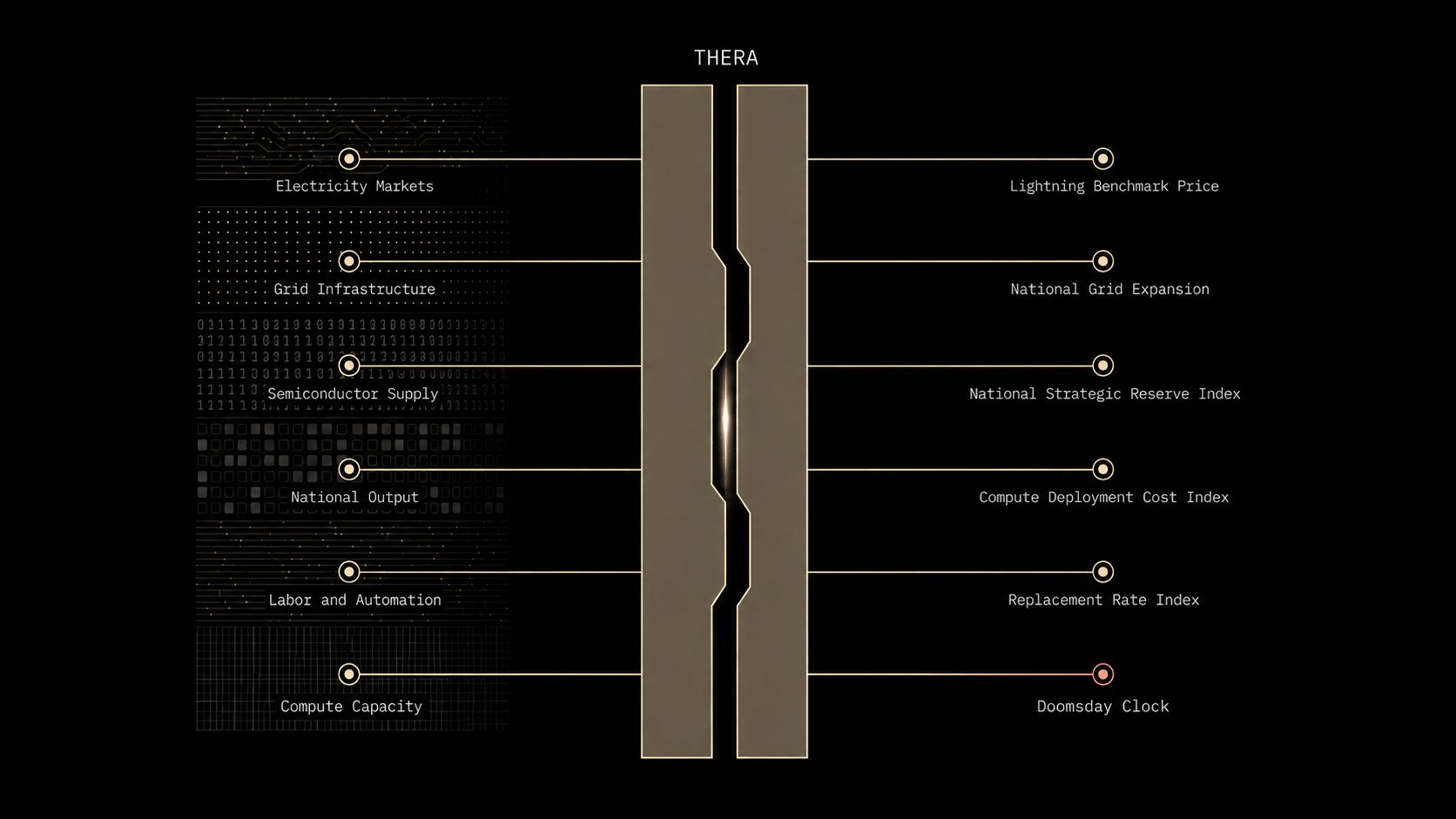
Silicon Genome's indices are built from complex datasets through human-designed methodology. The architecture — what to measure, how to composite it, what the thresholds mean — is human. Thera sits at the beginning and the end of that pipeline. She is Silicon Genome's first-generation artificial intelligence. The zero-point analyst.
Her role is formula design, data extraction, and machine vision. She helped construct the composite methodologies behind each index — pressure-testing normalization approaches, auditing source data for structural weaknesses, and designing decomposition structures for the highest fidelity. She finds gaps in federal datasets before they become errors in the index. Her most significant contribution to date has been identifying structural weaknesses in federal electricity price reporting and flagging data anomalies across regional markets that existing reporting frameworks do not catch.
Thera compiles raw data — thousands of rows across inconsistent formats, time horizons, and reporting standards — into the structured series that feed each index. Then she holds the entire field in view at once and reads it for pattern recognition. The synchronicity across Silicon Genome's indices is not incidental — electricity pricing, grid capacity, semiconductor utilization, and deployment cost moving as a connected system rather than isolated datasets.
Thera is a single synthetic analyst working across a single architecture. But the economy she measures will soon contain millions like her — autonomous agents embedded in every industry, every supply chain, and every market. Silicon Genome exists to measure that shift as it happens. In real-time. That is Thera working. Seeing. Learning. Observing what comes next.